

Why Equine Liability Law Works Differently Than Other Injury Claims
Most states have passed a law called an Equine Activity Liability Act, and it shields stable owners and instructors from many lawsuits tied to horses. The statute assumes that horses carry unpredictable risks that no amount of care can fully remove, so it blocks claims based only on a horse acting like a horse.
 That protection has limits, though. An equine facility loses its shield when it provides faulty tack, fails to assess a rider’s skill level, hides a known dangerous condition on the property, or acts with reckless disregard for someone’s safety. Those exceptions turn a routine “horses are unpredictable” defense into a real negligence case.
Inherent Risk vs. Negligence
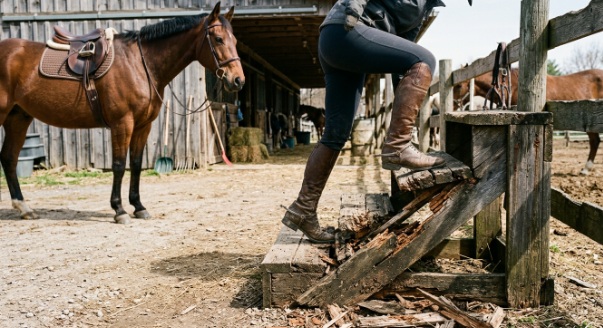
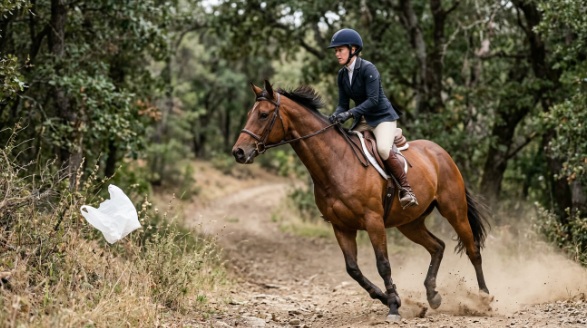
A horse spooking at a plastic bag and unseating an experienced rider usually counts as an inherent risk, the kind the statute protects against. A rotting mounting block that collapses, or a saddle with a cracked girth strap that the barn knew about, moves the injury into ordinary negligence territory instead.
Why This Matters
Insurance adjusters lean hard on the inherent-risk defense first, regardless of the facts. Separating what a horse did unpredictably from what the facility failed to maintain becomes the entire fight in most livery yard injury claims.
What a Boarding Stable Owes a Boarder’s Horse
A livery yard owner does not just supply a stall. Once the yard accepts a horse for care, the law generally requires the owner to exercise reasonable care over feeding, turnout, fencing, and daily supervision.
That duty covers the horse’s welfare and, indirectly, the safety of anyone handling that horse on the property. A fence line left unrepaired for months, or a herd turnout that mixes an aggressive horse with boarders’ horses without warning, can expose the facility to a claim even without a written contract spelling out every obligation.
When a barn accident goes beyond unpredictable horse behavior, such as a broken mounting block or faulty tack, getting clear answers makes all the difference. In South Carolina, Stewart Law Offices can help injured riders evaluate their options and see where a facility may have failed in its duty of care across Columbia, Rock Hill, Beaufort, Lexington, Fort Mill, Bluffton, and Lake Wylie. For individuals recovering at home or in a hospital, their legal team can travel directly to them.
Documenting an Injury at a Riding Facility
 Evidence disappears fast on a working farm. Manure gets cleared, fencing gets patched, and a torn stirrup leather gets replaced within days of an incident, often before anyone realizes a legal claim might follow.
Photographing the exact spot of the injury, the condition of any equipment involved, and the horse’s location within the barn hierarchy preserves details that verbal accounts alone cannot recreate weeks later. Requesting the facility’s incident report in writing, rather than relying on a verbal summary from staff, creates a documented timeline that matches what actually happened.
Brent Stewart, a multiple award-winning South Carolina personal injury lawyer with three decades of experience and founder of https://www.stewartlawoffices.net/, an injury firm listed on LawInfo, Best Lawyers, Lawyers.com, and Attorney at Law Magazine, notes why acting quickly secures a claim’s foundation: “Memory fades fast, but a written account of what happened holds up. This type of documentation may seem small in the moment, but months later, when the insurance company is disputing your allegations of the accident, it is priceless.”
How Waivers Actually Work at Riding Facilities
Nearly every stable asks a rider to sign a liability waiver before a lesson or trail ride begins. Riders often assume that signature ends any chance of recovery, but a waiver rarely covers everything.
Courts routinely refuse to enforce a waiver against gross negligence, intentional misconduct, or violations of state equine statutes that require specific warning signage. A waiver that fails to mention the exact inherent risks named in a state’s statute can also lose its protective effect, since many equine statutes require particular language to make the release valid.
Employee and Instructor Liability
A riding instructor who mismatches a beginner with a horse too advanced for their skill level creates a distinct problem from ordinary equine risk. Most Equine Activity Liability Acts specifically strip away legal protection when a professional fails to make a reasonable effort to determine whether a participant can safely handle the equine activity assigned to them.
That failure shows up in specific ways. Placing a first-time rider on a horse known to buck under saddle, skipping a basic skills assessment before a trail ride, or ignoring a rider’s stated inexperience are decisions an instructor made, not risks the horse created on its own.
Third-Party Contractors and Property Defects
Livery yards frequently bring in farriers, veterinarians, and independent trainers who are not direct employees. When one of those contractors causes an injury, liability can shift away from the facility itself, but not always.
A property owner who hires a contractor to perform inherently risky work, such as handling an unpredictable horse during shoeing, can still retain some liability for the outcome. The property owner’s duty to maintain safe common areas, aisleways, and turnout gates does not transfer to a contractor just because that contractor caused the immediate harm.
Workers at Riding Facilities Face a Separate Set of Rules
Someone employed by a stable, rather than a boarder or lesson client, generally falls under a different legal framework entirely. Agricultural and equine workers often fall outside standard workers’ compensation coverage, depending on state classification rules, which change how an on-the-job injury is handled.
The Bureau of Labor Statistics recorded hundreds of nonfatal injuries and illnesses each year across agricultural support industries, a category that includes stable and boarding operations. A stable hand hurt while leading a horse to pasture may need to pursue a claim through general negligence law rather than a standard workplace injury system, depending on how the facility classifies its staff.
Property Conditions That Create Liability Beyond the Horse
Not every livery yard injury involves a horse directly. Uneven arena footing, poorly lit aisleways, and broken cross-tie hardware cause falls and crush injuries unrelated to an animal’s unpredictable behavior.
These hazards fall outside most Equine Activity Liability Act protections because the statute covers risks inherent to horses, not risks created by poor property maintenance. A rider who trips over a buried tie-down cable in a dark aisle has a claim rooted in ordinary premises liability, a separate legal theory from anything involving the horse itself.