

Horse barns do not look like classrooms. You smell hay, leather, and dust. You hear hooves on packed ground, metal buckles, short commands. Yet for many riders, the saddle becomes one of the most powerful places to learn, focus, and remember.
 Parents often notice the change first. A child who struggles to sit still during homework suddenly spends an hour on a pony, following instructions and remembering complex patterns in the arena. Adults describe a similar shift. After a lesson, the brain feels settled and alert, as if someone adjusted the internal volume knob. You could pay for research paper on EssayPro and wade through every study on equine-assisted activity. But first, let us explain this in plain language. Horse riding will not replace school or therapy. Yet it can shape the brain systems that support learning and memory in surprising ways.
How Horse Riding Talks to the Nervous System
A horse’s movement feels unlike a bike ride or a run on a treadmill. With each step, the rider’s body shifts in several directions at once: a gentle roll forward, a sway through the hips, a small lift and drop that repeats in rhythm with the hooves. Muscles adjust, joints respond, the eyes track the horizon, and the inner ear measures every change. All of it feeds the brain in one continuous stream.
That flow trains several systems at once:
- The vestibular system, which helps with balance and spatial orientation
- Proprioception, which tells you where your body is in space
- Postural control, the quiet work of holding an aligned seat
For a learning brain, this rich sensory input matters. It can sharpen awareness of where the body is, which often links to how well a person can sit, write, or track a line of text. Many occupational therapists use similar principles in clinics. The horse simply offers a larger, more complex version of the same idea.
Attention, Rhythm, and Working Memory
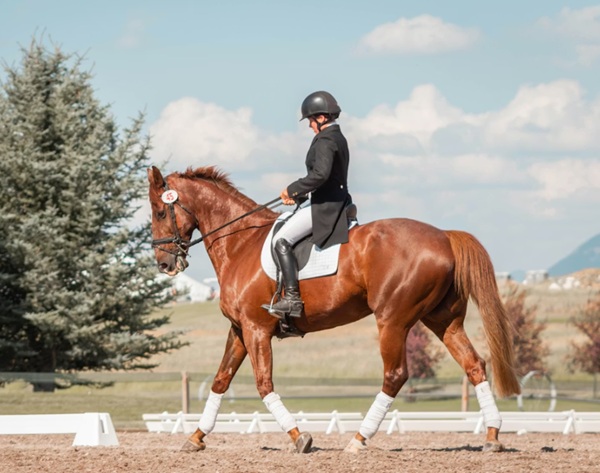
Riding asks for a very specific kind of attention. You keep an eye on the horse’s ears, feel the beat of the gait, listen for the instructor, and still hold a sequence in your head: down the long side, curve past B, then cross the arena on a diagonal.
That sequence work taps into working memory, the short-term system that holds information long enough to use it. Riders rehearse instructions internally, then translate them into physical cues. When this happens again and again, lesson after lesson, the brain practices keeping information active and ordered.
Students who struggle with focus sometimes discover that the saddle provides a structure they rarely feel at a desk. Of course, you cannot simply pay to write research paper and claim that riding cures attention problems. The relationship is more subtle. Riding can give the brain repeated experiences of sustained, purposeful focus, which may then support other learning tasks.
Stress, Emotion, and the Learning Window
Learning tends to settle in when the nervous system feels steady. Too flat and the mind drifts; too wound up and it cannot hold new information. Horses often nudge riders toward that workable middle. Their warmth against the saddle, the soft sound of breathing, and the swing of the gait can ease tension for some people. For others, the animal’s size and strength demand just enough alertness to pull them out of looping thoughts and into the moment.
Riders talk about leaving the arena with a quieter mind. Researchers who study equine-assisted work track heart rate, cortisol, and reported anxiety, then match those shifts with how people perform on attention and memory tasks.
If you ever sketch a research paper outline on this topic, you might place stress regulation and emotional engagement right after the section on sensory input. That is where many studies position the bridge between riding sessions and cognitive outcomes.
What the Research Suggests About Memory
Formal studies on horse riding and memory cluster in a few areas: children with attention or developmental differences, adults in rehabilitation, and sometimes older riders. Many projects have small sample sizes, yet patterns still appear.
Researchers report improvements in:
- Short-term recall of sequences and instructions
- Visual-spatial memory, such as remembering routes or patterns in the arena
- Confidence in learning new tasks
 One explanation is simple practice. A rider repeats the same movements again and again. Another lies in emotion. The experience feels vivid and sometimes exhilarating, which helps the brain mark those moments as worth keeping.
Scan recent research paper topics in occupational therapy or special education, and you will see equine-assisted programs appear often. The studies are still growing, yet many already nudge therapists and teachers to view riding as serious work, not just a pleasant outing.
How Educators Can Use These Insights
Most schools will not install a stable next to the library. Still, teachers and families can borrow principles from horse riding and apply them to everyday learning.
Consider:
- Building rhythmic movement into routines, such as short walks or balance exercises
- Using sequenced instructions that mirror riding patterns
- Encouraging activities that engage body and emotion together, not only screen-based tasks
For students who ride already, teachers can connect lessons to the arena. For example, a science assignment might explore muscle groups in the rider’s posture. Linking academic work to embodied experience can make abstract concepts more accessible.
Final thoughts
Horse riding can coexist with every kind of report card. Its real gift lives elsewhere, in the way it blends physical effort with feeling, concentration, and real contact with another living creature. That mix reaches straight into the systems the brain uses to learn and to store memories.
In the saddle, scattered instructions turn into clear patterns, then into habits that settle deep into the body. Riders learn to catch tiny shifts in the horse’s back, guess the next stride, and steady themselves when something unexpected happens. Those moments train judgment and flexibility as much as leg muscles.
For anyone curious about how experience reshapes the brain, an arena can feel like a quiet laboratory. You ride for the joy of it, yet the effects keep echoing. Each session leaves a faint line in the nervous system, a reminder that you can stay present, hold information, and learn in motion with a horse beneath you and open space ahead.