


A quiet bridleway or paddock may look untouched, yet evidence of centuries of human activity could be buried beneath. Farmers, traders, horse riders and local families may all have dropped or buried objects as they worked and travelled across the countryside.
Metal detectors can bring those forgotten items back to the surface. Productive searching starts before entering the field, with maps, local records and careful research revealing where past activity was most likely to occur.
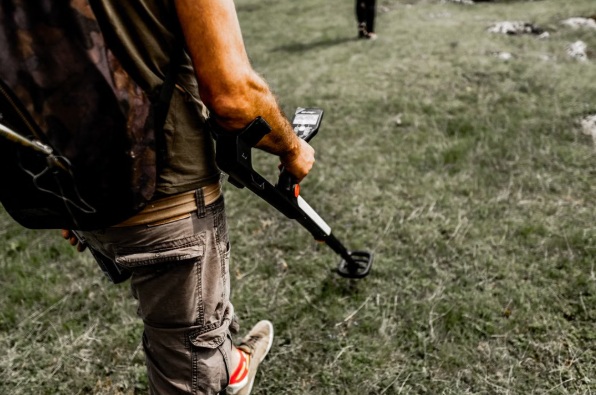 Researching the Hidden History of Rural Land
Modern field boundaries rarely tell the whole story of a property. A large field may once have contained cottages, smaller enclosures, a market route or a track connecting farms to a nearby village.
Old Ordnance Survey maps are an excellent starting point for researching land, especially when compared across different dates. Look for vanished buildings, wells, mills, footpaths, field names and boundaries that no longer appear on modern maps.
Several resources can strengthen the research process. You should:
- Compare historical maps with current satellite images
- Search local archives for former farms and settlements
- Ask landowners about old tracks and demolished buildings
Local Historic Environment Records can provide details about known archaeology nearby. Parish records, newspaper archives and conversations with long-term residents may also reveal old fairs, military activity or gathering places.
Old Routes Can Shape What Lies Below
Bridleways (which are old rights of way), hollow ways and farm tracks carried people through rural landscapes for generations. Such repeated travel means that the chance of finding items like coins, buckles, horseshoes and personal items that were lost along the route is increased.
Modern paths do not always follow their original alignment. So, search for parallel banks, worn depressions, oddly positioned gateways and hedgerows leading towards no obvious destination. Such clues may mark a route that shifted or disappeared.
Likely search areas include the edges of former tracks, entrances to old fields and places where routes meet. Everyday losses often occurred where people paused, worked, mounted horses or changed direction.
Choosing the Right Equipment
Your metal detector choice should reflect the soil, terrain and types of targets likely to be present. A general-purpose machine may suit coins, buckles and agricultural objects, while specialised technology can help with difficult ground or unusually small targets.
For instance, for the countryside where natural gold may be present, gold detectors should be used. They are designed to locate small, low-conductivity nuggets that general-purpose machines often miss.
Their ability to handle harsh, mineralised ground can make them suitable for challenging prospecting conditions.
Coil size and detector settings matter as much as the machine itself, though. Smaller coils can improve control around iron-contaminated gateways, while larger coils may cover open paddocks more efficiently.
Reading the Landscape Before Detecting
Maps become more useful when combined with visible evidence on the ground. Ridge-and-furrow patterns can indicate medieval cultivation, while raised platforms, scattered stone or changes in vegetation may point towards lost structures.
According to research from Historic England, lidar (light detection and ranging) can reveal slight earthworks and hidden features that are difficult to recognise at ground level. Free online maps allow members of the public to examine the landscape before visiting.
Recording Finds Without Losing Their Story
An artefact has greater historical value when its location and surroundings are recorded accurately. Removing an item without noting its position can separate it from the wider story of the route, settlement or field where it was found.
Record the location with GPS, photograph the object before cleaning and note its depth and nearby features. Keep finds separated by search area, especially when several signals form a possible pattern.
Permission from the landowner should always be secured before detecting. Scheduled monuments and other protected sites may carry additional restrictions, while potential treasure must be reported through the correct legal process.
Let the Land Tell Its Full Story
Exploring the hidden history of rural land is less about chasing valuable objects and more about understanding where people lived, worked and travelled. Careful research turns each detector signal into part of a larger picture rather than an isolated find.
Hopefully this article has been of help. If that is the case, be sure to explore some of our other insightful content!