


Racing has always been part muscle, part tactics, part luck. Trainers go by the eye test, jockeys ride the feel, and owners stick with what’s worked over the years. These days, there’s something else in the mix, ticking away behind the scenes. No silks, no saddle — just algorithms crunching numbers faster than any human ever could.
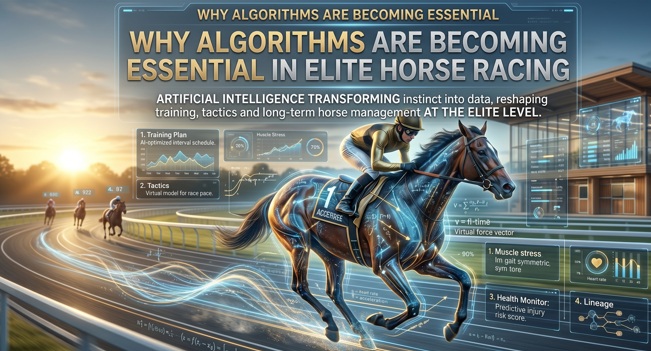
Gut instinct no longer carries the load on its own. Artificial intelligence now feeds stables with deep datasets and complex models that support decisions across the board:
- buying a yearling
- assessing a rider
- reading how a race is likely to unfold
Big data is reshaping preparation, race tactics and even how potential is defined long before a horse hits peak form.
 How Champions Are Built Before They Race
At the elite end of the sport, champions are being analysed well before they win their first cheque. AI systems now look beyond surface pedigree charts and into genetic markers tied to stamina, speed and injury risk.
Genomic analysis sits at the heart of this approach. Companies such as Equinome offer DNA tests that predict whether a young horse is better suited to short, sharp sprints or longer staying races. That insight can shape an entire training program before serious work even begins.
On the training track, biometric sensors sewn into saddle cloths and rugs collect live data every session.
Together, these tools help trainers:
- spot hidden upside in otherwise overlooked horses
- tailor workloads to individual physical profiles
- reduce injury risk through early intervention
These systems track heart rate, stride length and movement symmetry in real time, flagging inefficiencies that the naked eye might miss. Subtle gait changes often show up weeks before a breakdown. The result is a more precise pathway from raw prospect to genuine contender.
How Algorithms Calculate the Odds
Transformation of instinct into measurable probability naturally feeds into another highly technical side of racing — betting. The same data streams that guide stables now power the engines that price races.
Bookmakers rely on predictive models driven by machine learning, processing vast datasets that include:
- training times
- race history
- genetics
- weather
- track conditions
The difference is intent. Stables use the data to prepare a horse; betting platforms use it to calculate the likelihood of an outcome. During races, things get even sharper. In-play odds are updated continuously as systems analyse live video through computer vision.
That same technological backbone appears across digital entertainment where payid pokies operates. Within the broader online casino Australia landscape, comparable monitoring systems log every game event in real time. These systems flag irregular behaviour and keep payout calculations consistent, even under peak load.
Support for casino PayID online pokies platforms is built around instant settlement and traceable transactions, reducing processing delays and reconciliation errors during peak traffic periods. The mechanics behind pokies online follow strict payid pokies verification rules, relying on automated audits rather than manual checks.
Race Tactics and the Algorithmic Jockey
Preparation and pricing are only half the story. AI is also reshaping how races are tactically approached.
Algorithms can simulate race scenarios thousands of times, factoring in the known habits of rival horses. Front-runners, closers and grinders are modelled together to identify where gaps are likely to open. That modelling helps teams decide when to sit quiet and when to go bang.
Pace planning works the same way. Using endurance data collected in training, systems suggest optimal phases to conserve energy or push forward. Instead of vague instructions, jockeys head into races with strategies grounded in probability.
This turns race tactics into something closer to applied science. The jockey still makes the call in the heat of battle, but the plan behind it is built on evidence rather than hunches.
The Future of Racing Health Longevity and Prevention
The next frontier is protecting horses and extending careers. With elite thoroughbreds worth millions, prevention matters as much as performance.
Predictive injury analytics are already in play. AI systems analyse micro-changes in gait and load response, spotting warning signs before a tendon or ligament gives way. That early signal allows trainers to adjust workloads or rest a horse before serious damage occurs.
Recovery and nutrition are following suit. Algorithms now factor in metabolism, workload and stress markers to design individual feeding plans and recovery schedules. No two horses recover the same way, and the data finally reflects that reality.
The payoff is clear: fewer injuries, longer careers and better welfare outcomes, alongside reduced financial risk for owners.
Humans and Machines Running Together
AI hasn’t rocked up to steal jobs in the stable. Trainers still trust their eye, jockeys still ride by feel, and decades on the track still matter. What’s changed is that decisions don’t have to fly blind anymore.
The winners are no longer just the quickest runners. They’re the outfits that link horsepower, know-how and smart tech into a setup that actually works race after race.