

The hedge around a livery yard does more than make a property look attractive. It may shelter paddocks from the wind, define access routes and provide habitat for wildlife. But overgrown or damaged boundaries can obscure fencing, restrict visibility and introduce risks for horses and people. Maintenance should therefore start with welfare and site safety, not appearance.
Inspect the boundary regularly
 Walk the perimeter from a safe position and look for damaged fencing, loose wire, gaps, overhanging branches and plants extending into gateways. Pay particular attention to access for horseboxes, deliveries and emergency vehicles. A hedge is not a substitute for suitable secure fencing where horses are contained. Record problems and arrange repairs before animals can reach an unsafe area.
Keep horses away from cutting work
Powered hedge trimmers have moving, sharp blades and can create noise and flying debris. Never use them near horses or people handling horses. Plan work for a time when animals are safely kept well away, secure gates and warn everyone using the yard. Contractors should understand the site layout and how animals may respond to unfamiliar sound or movement.
Check plants and clippings for toxicity
Yew is highly toxic to horses, and other common hedging plants may also present a hazard. Do not assume that a clipping is safe because it comes from a familiar garden plant. Identify vegetation, prevent access to cut material and remove all clippings from paddocks, feed areas and other places where animals could eat them. If poisoning is suspected, contact a veterinarian urgently.
Select equipment for the site
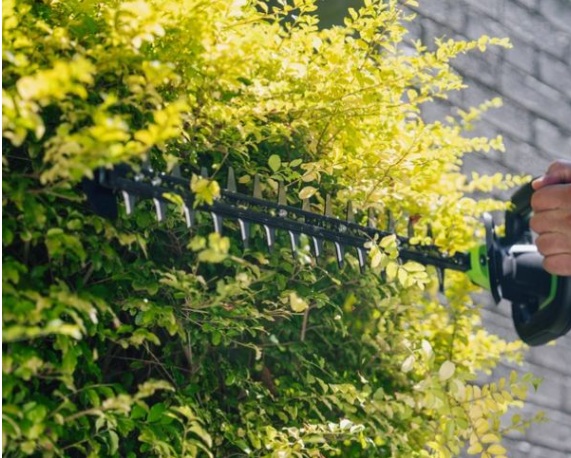
Hand tools can suit short, accessible sections. For longer boundaries, battery hedge trimmers may be a practical option because there is no trailing power cable or petrol to store. They are not silent, and the blades remain dangerous. Compare the weight, cutting capacity, length and battery requirements with the task, follow the manufacturer’s instructions and restrict use to appropriately trained or competent adults.
Respect nesting wildlife
Before cutting, inspect the hedge for birds and other animals. Active wild bird nests have legal protection, and cutting must not disturb them. The main nesting period is often described as spring and summer, but checks remain important throughout the year. Delay work where protected wildlife may be affected and seek advice where needed.
Keep tools and work areas safe
Establish a clearly marked working area, keep horses and yard users away and wear suitable protective equipment. Avoid unstable ladders, overhead reaching and wet or slippery footing. Collect branches and sharp debris immediately. Do not leave tools, batteries or waste where horses could reach them.
Use contractors carefully
For extensive or high boundaries, consider an insured contractor familiar with equestrian environments. Agree how gates will be managed, where vehicles can park and where clippings will go. Confirm the work plan with liveries and staff beforehand so nobody inadvertently brings a horse into the work area.
A welfare-first routine
Good boundary management combines secure fencing, suitable planting, clear access and careful timing. When horses are kept away from cutting operations and clippings are removed promptly, hedge care can support both the yard’s appearance and its safe day-to-day running.