

Anyone who keeps a horse at livery knows the drill. You pull up in the dark, torch in one hand, headcollar in the other, and the yard is silent except for the shuffle of hooves in shavings. Mornings like this happen before most people are awake, and they happen again in reverse after work, headlights sweeping across an empty car park as the last box gets mucked out for the night.
It is a rhythm that non-horsey friends rarely understand. A short drive to a yard down a farm track might not sound like much, but across a week of early starts and late finishes, it adds up to hours spent largely on your own, with a horse for company and not much else.
Livery yards are rarely built for convenience. Most sit on the edge of villages or down unmarked lanes, chosen for grazing and drainage rather than footfall, so the people who keep horses there tend to arrive and leave at odd times dictated by shift patterns, school runs or commutes rather than each other’s company. Two liveries sharing a yard for years can go weeks without crossing paths if their routines do not line up.
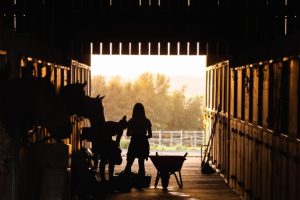 That kind of solitary stretch, an hour or so of mucking out and hay nets with nobody else around, is when a lot of owners reach for their phone once the horse is settled. Some scroll through the yard group chat, some catch up on a podcast during the drive home, and others unwind with a quick video chat on something like LuckyCrush before heading indoors for the night. None of it replaces an actual conversation over a stable door, but it fills the gap on the evenings when there simply is not one to be had.
Long Days, Short Windows for Company
Horse ownership does not pause for a social life. Feeding times, turnout and evening checks happen whether or not anyone fancies seeing another human being that day, and for owners juggling a full-time job around them, the yard often becomes the one fixed appointment in an otherwise flexible week. Weekends can mean even more solitary time, since that is when bigger jobs like poo-picking a field or clearing a muck heap tend to get done, usually alone while everyone else has a lie-in.
The isolation is not really about the horse. Horses are good company in their own way, and plenty of owners would say the quiet is part of the appeal after a stressful day at work. What wears thin is having nobody to talk to about anything beyond feed quantities and field rotations, especially through the darker months when visits are bookended by headlamps rather than daylight.
Why DIY Livery Sharpens the Pattern
DIY livery tends to be where this solitary pattern shows up most clearly. Taking on the mucking out, feeding and turnout yourself instead of paying a yard to do it keeps costs down, but it also means at least two visits a day, every single day, regardless of weather or how tired you are. One look at the true time and cost of managing a horse yourself puts stable duties at roughly an hour per visit, which for most DIY owners means the better part of two hours spent largely alone with their horse.
That total does not include driving, tacking up or actually riding, so on busy weeks the yard can swallow more solo hours than anything else outside work. It is one reason some owners eventually move towards part or full livery, trading independence for slightly fewer hours spent doing everything single-handed.
The Livery Community Is Real, Just Spread Out
None of this means livery communities are not close. In plenty of cases they are closer than people outside the horse world would guess. A yard WhatsApp group can light up at ten at night because somebody has noticed a horse standing oddly, and owners will happily hack out together at weekends or cover feeds for each other during a week away. It is simply that this closeness happens in bursts rather than through daily face-to-face time, which is worth weighing up when choosing a yard that matches how sociable you want your routine to be, alongside the usual questions about facilities, turnout and price.
Some yards lean into this more, with communal tack rooms or a rota system that forces a bit of overlap between owners. Others are quieter by design, suiting people who want somewhere to keep a horse without much small talk. Neither approach is wrong, but it helps to know which kind of yard you are choosing before you sign up, rather than discovering it three months in, in the middle of a long, silent February.
Filling the Gaps Between Visits
Most owners end up patching the quiet with small, ordinary habits rather than any single fix. A voice note to a friend on the drive over, a photo of the horse dozing in the sun sent to a family group chat, a forum thread scrolled through while a kettle boils in the yard tea room. None of it is dramatic, and none of it needs to be. It simply fills the fifteen minutes here and there in a routine that runs on its own schedule regardless of who else is around.
The people who manage the solitary side of yard life best are usually the ones who stop expecting it to feel like a constant social outlet and instead treat the quiet stretches as their own. A cold February evening spent alone with a horse and a headlamp is never going to be a lively occasion, but it need not feel bleak either, once you have found your own small ways of staying connected to the world beyond the stable door.
That balance, part solitary routine and part scattered contact with people who understand exactly why you are still at the yard at half past nine on a Tuesday, is probably the most honest description of what livery life involves. It rewards patience more than sociability, and it helps to know that going in.