

Could your horse help with important research?
The University of Liverpool is recruiting horse owners and those responsible for horses across England to take part in the HealthyHorseAMR project, a study investigating antimicrobial resistance (AMR) in horses.
 Antimicrobial resistance occurs when bacteria become resistant to medicines used to treat infections, potentially making infections more difficult or even impossible to treat. Resistant bacteria can be carried by healthy animals without causing illness and can potentially spread between animals, people and the environment.
The project, funded by the Veterinary Medicines Directorate (VMD), aims to find the best ways to monitor AMR in the UK’s healthy horse population and identify emerging patterns of resistance before they become a bigger problem.
How can horse owners get involved?
Taking part is straightforward. If you are responsible for horses in England — whether you are an owner, trainer, livery yard owner or yard manager — you can register your interest online.
Eligible horses must:
- Live in England
- Not currently be receiving antibiotics
- Not have been in hospital during the previous 10 days
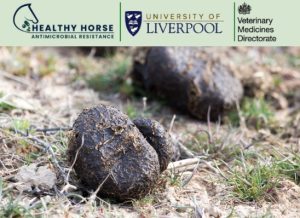
Once registered, participants will be sent a free sampling kit with pre-paid return postage. All that is required is to collect a faecal (poo) sample from the horse and return it to the University of Liverpool’s laboratory.
The project is also recruiting a smaller number of horses for a nasal swab study, so participants can indicate if they would be interested in taking part in this additional research.
Help build a picture of AMR in horses
Unlike livestock, there is currently no national surveillance programme monitoring antimicrobial resistance in healthy horses in the UK. By collecting samples from horses across England, the HealthyHorseAMR project hopes to establish valuable baseline information about how common resistant bacteria are and identify emerging trends.
Horse owners and yards can play an important part in this research simply by providing a sample from their horse.
You can find out more and register your interest on the University of Liverpool’s HealthyHorseAMR project website.
Find out more and register your interest – University of Liverpool
The project cannot provide individual animal results, but anonymous overall findings will be shared through the project’s results dashboard.