


Being around horses comes with elements of change, physical exertion, mud, dust, rain and hours outdoors in addition to facing the weather. When riding or grooming or mucking out, as you will do whilst carrying out daily yard duties, the fabric in which your clothing is made up of can make a huge difference to comfort and practicality.
While there is no perfect fabric for all things equestrian. Depending on what the forecast calls for, your level of activity and whether windproof, warmth, breathability or weather protection is paramount to you.
Choosing the Right Equestrian Fabric What to Look For
When it comes to equestrian clothing, you have some characteristics that should be maintained. Since excess heat and moisture escape through breathability, it is a consideration when riding in warm weather or doing active yard work. A sweaty trap can become uncomfortable very quickly.
Durability is equally important. Horses are hard on clothes; pieces may rub against rough surfaces, stable doors, and equipment; spend time sunk in mud and be washed regularly. The fabrics that are more durable for repetitive use, therefore, tend to be even more precious.
Flexibility also matters. It’s called riding, not being tied down and forcefully dressed to be as stiff as a board; so shoulders, hips, knees or arms should not be constricted by garments. For outdoor work, it can also make a big difference to have quick drying properties, weather resistance and easy maintenance.
Cotton It’s Cool And Comfortable But Not The Right Fabric For Every Situation
Cotton is the most used fiber, because it feels nice and comfy, and is a natural breathable fiber. In mild and relatively dry conditions, it can do the job for most everyday yard tasks.
But cotton reaches the water by soaking it up instead of sweeping it away from your skin as efficiently. After getting wet, either in the rain or evaporating perspiration, it can stay damp for ages and feel chilly.
Because of this, cotton is generally more suitable for casual stable wear or moderate-weather activities than it is for strenuous activity while riding in wet or cool conditions.
Polyester It is Practical for Active Outdoor Use
Polyester is also a very common fabric choice for performance clothing as it is lightweight, durable and tends to dry faster than cotton. The construction of the polyester material can also give useful moisture-management properties.
Which makes it the option for riders who get hot when exercising or doing some physical work in the garden.
This mode of making clothes has the drawback that certain polyester clothing items can absorb odours. What matters here too is not just the quality of the fabric and the construction but not every one would be sufficiently comfortable or breathable to repay the cost.
Merino Wool for Cold-Weather Riding
This is particularly helpful when temperatures drop and merino wool comes into play. Instead, as it provides warmth it should be regulated around weight.
The other advantage is better moisture management and odor resistance than many normal fabrics. Which is really useful when a rider is out all day outside.
On the other hand though, merino wool garments do require care in order to remain effective, and buying new ones can be cost prohibitive. Merino is not likely the material of choice for more extreme types of yard work.
Fleece as a Warm Mid-Layer
Fleece It is a useful insulating layer for cold weather. It keeps you warm without the bulk of many heavy traditional garments and can often be worn under an outer protective layer.
Especially useful on cold mornings in the yard or between exercises. That said, fleece is not the end-all for wet weather. It is most effective if worn as one of a series of layers, with an outer layer providing resistance to rain and wind.
Nylon for Hard-Wearing Conditions
It is because nylon has great resistance and strength. Such features make it effective for clothing designed to perform under extreme outdoor situations.
Durability is especially crucial for yard work as clothing might rub against fences, stable equipment, rough surfaces or muddy environments.
Meanwhile, nylon has more commonly been used as an outerwear and technical fabric when usability and lightweight properties need to be prioritized.
Understanding Blended and Technical Fabrics
In fact, much modern outdoor gear incorporates multiple fibres rather than sticking with one material. A mixture of cotton and polyester, for example, can give the lightness prepared with cotton but at the same time perform well in terms of sturdiness and speed of drying.
Some have a wool and synthetic blend to add strength, fast-drying, or easy-care.
Therefore, seeking guidance from the fabric composition can prove to be more beneficial than only relying on the garment label and choosing one fibre as better over others.
Even lightweight accessories can serve a functional purpose for outdoor routines. Companies like 4inbandana provide bandanas and associated accessories that should really be thought of next to clothing when considering lightweight protection and comfort in the outdoors world.
Choosing Fabrics by Activity
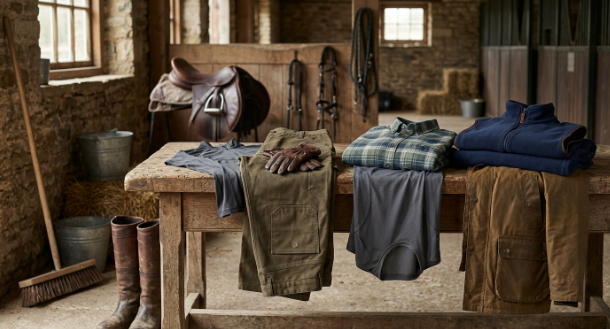
Various equestrian sports develop various clothing demands.
Cycling: Seek flexibility, breathability and moisture control. Clothing should have the least resistance and help people to regulate their body temperature.
Mucking out: the search for strength and ease of cleaning become more vital. We are talking about clothes which are suitable for dust, dirt and repeated wash.
Grooming: Soft, breathable fabrics will also keep long grooming sessions more bearable, and easy-care fabrics are a boon you really need when clothes get dusty or dirty.
Long- The longer your yard days, the more layering and adaptability you need. Weather during the day can change greatly, so clothes that you can layer are often individually much more useful than one single heavy thing.
Choosing Fabrics for British Weather
The British weather being unpredictable, means clothing that is adaptable to the elements comes in handy.
In spring, light breathable layers will help to deal with mild temperatures and occasional showers.
Especially as the weather warms up in summer, breathable and moisture-managing fabrics provide much benefit, particularly during both active riding often in really hot temps whilst being covered by 1010 degree temperatures performing yardwork.
In fall or early spring, it can often be smart to combine an insulating layer with a weather resistant outer layer since temperature and conditions change more frequently in those seasons.
A base layer every winter to help with moisture management, insulated mid-layers for warmth and an outer layer to protect from wind and rain.
You also need to take into account the difference between water-resistant and water-proofing clothes! Water resistant means that the material may withstand some incidental dampness, but not prolonged exposure to heavy rain.
Why Layering Matters
Instead of searching for that one, miracle fabric to do it all, riders tend to get better results through layering.
A base layer needs to wick moisture away from the skin. It recommends a mid-layer for warmth and an outer layer that protects from wind and rain.
So the beauty of this system is its flexibility. If you get hot when riding, take an item off. A second layer may be necessary during cooler evening chores in the yard.
Caring for Equestrian Clothing
Overall, it is about good fabric caring and maximizing your clothing use in case you have outdoor clothes. Always refer to the garment washing instructions, especially for technical fabrics and waterproofs.
Mud needing to be washed from linen should ideally be removed before washing, when possible. Some technical garments also demand specific detergents or care procedures to preserve their performance.
Wash at lower temperatures & dry the clothes in accordance with the care label this is especially true for clothing worn frequently after yard work.
Common Fabric Mistakes to Avoid
For example, heavy cotton will treat you very poorly in cold, damp conditions. It can turn uncomfortably slow drying once saturated.
Another one is going for warmth without breathability. Over-Insulating and possibly overheating themselves when they engage in active riding.
You also do not want to make the mistake of thinking that all synthetic materials behave in precisely the same manner. Performance can be heavily influenced by the construction, thickness and weave of the material, as well as garment design.
Finally, consider maintenance. And a fancy fabric is worthless if it’s impossible to clean or doesn’t work with your daily routine.
Final Thoughts
Either way, it is ultimately about matching the character of fabrics to an activity and its most likely conditions. Cotton would be nice in mild weather, polyester can be breathable under active conditions, merino wool will give you a lot of insulation for cold and fleece is an excellent mid-layer and nylon provides durability against harsh conditions.
For riders and yard workers, the most sensible method is typically to layer suitable materials together rather than rely on a single fabric for all conditions. When you consider breathability, durability, moisture management, weather protection, flexibility and wash up easily on a routine basis then it is much easier to create comfortable clothes you can wear around the yard or as in my case also when riding.