


Technical Guide to the 9×10 Pre-Built Horse Stall for Equestrian Facilities: Market Context and Operational Importance
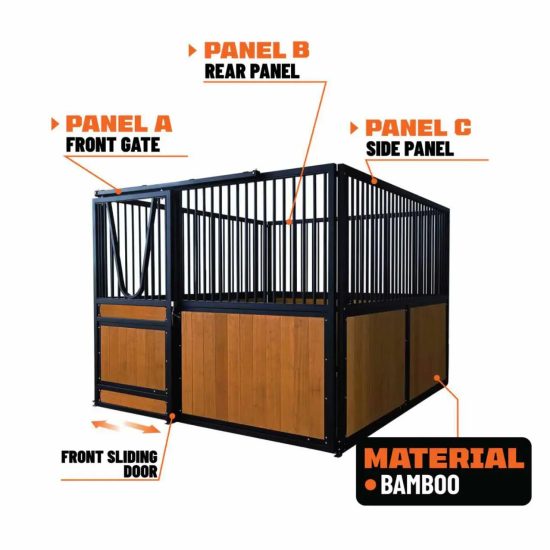 Equestrian facilities across Canada and the United Kingdom require durable, safe housing for horses. The 9-foot by 10-foot pre-built horse stall offers a standardized solution for boarding operations, breeding farms, and training centres. For facility managers and horse owners, a properly constructed stall reduces injury risks and improves daily management efficiency. Bamboo construction provides a sustainable alternative to traditional wood, with natural resistance to moisture and decay.
Technical Overview and Applications
The pre-built stall measures 9 feet in width and 10 feet in depth, providing 90 square feet of floor space. The vertical bar front allows horses to see their surroundings while preventing escape. Key specifications:
- Dimensions: 9 feet wide by 10 feet deep
- Material: Bamboo construction
- Front configuration: Vertical bars
- Assembly: Pre-fabricated panels
Applications include boarding stables, breeding farms, training facilities, veterinary clinics, and private horse properties.
Efficiency, Safety and Productivity
The 9×10 dimension allows horses to lie down comfortably and turn around without difficulty. Vertical bar spacing prevents hoof entrapment while maintaining visibility. Safety features include smooth edges without sharp protrusions and secure latching mechanisms. For facility operators, standardized stall sizes simplify bedding purchasing and cleaning routines.
Technical Capabilities
Bamboo has compressive strength higher than many traditional hardwoods, with a Janka hardness rating comparable to red oak. The material naturally resists moisture absorption, reducing swelling and warping in humid barn environments. Bamboo contains antimicrobial compounds that inhibit mold and bacteria growth. The pre-built design reduces on-site construction time compared to custom-built stalls.
Factors Influencing Performance
- Installation quality: Level floor and secure anchoring prevent panel shifting
- Hardware condition: Loose bolts or worn latches increase escape risk
- Chewing behaviour: Some horses may chew bamboo; cribbing collars may be needed
- Cleaning protocols: Regular washing prevents ammonia damage
Safety Best Practices
Verify stall location permits emergency access from front and rear. Ensure flooring is level and drainable. Check all latches daily for proper function. Inspect bamboo surfaces weekly for splintering or cracking. Maintain bedding depth of at least 4 inches. Remove horses before any stall repairs or modifications.
Equipment Types and Attachments
Pre-built stalls arrive as panel kits for on-site assembly. Modular stalls allow reconfiguration. Attachments include removable feed buckets, hay racks, corner waterers, stall mats, and anti-cribbing strips. Swing-out doors or sliding doors are common front closure options.
Advantages and Limitations
Advantages: Pre-built design reduces construction time and labor. Bamboo offers natural moisture and decay resistance. Vertical bar front provides visibility and air circulation. 9×10 dimension accommodates most horse breeds. Bamboo is a rapidly renewable resource.
Limitations: Bamboo may be susceptible to chewing damage. Lower impact resistance than steel. Fixed dimensions may not suit unusual barn layouts. Higher cost than pressure-treated pine. Not suitable for stallions requiring reinforced steel.
Real-World Example
A boarding stable in British Columbia expanded from 8 to 15 stalls using 9×10 pre-built bamboo units. Installation required two workers and three days for 7 stalls, compared to an estimated two weeks for custom wood construction. After 18 months, bamboo panels showed no warping or decay. Boarding customers reported horses appeared calm in the stalls. Annual maintenance consisted of hardware tightening and sealant application.
Conclusion and Future Trends
The 9×10 pre-built horse stall with vertical bar front and bamboo construction offers practical housing for equestrian facilities. The combination of standard sizing, sustainable material, and safety-focused design supports efficient management. Future trends include integrated automatic watering systems, recycled composite materials for increased durability, modular designs allowing dimension adjustments, and smart monitoring systems for stall conditions. Selecting bamboo stalls with proper anchoring and regular maintenance ensures safe, long-term horse housing.